





Child Psychologist
in Dubai
You know your child better than anyone. If something feels off — whether it's behavior at school, emotional outbursts at home, or a quiet withdrawal that worries you — trusting that instinct is the right first step. We help families understand what's really going on and give your child the tools to thrive.

You Don't Need a Diagnosis to Ask for Help
Many parents wait too long, hoping their child will "grow out of it." While some challenges are developmental phases, others benefit enormously from early support. An assessment doesn't commit you to anything — it simply gives you clarity.

Signs Your Child May Benefit from Support
Every child is different, and there's no single checklist. But if you notice several of these patterns persisting for weeks or months — and they're affecting your child's happiness, learning, or family life — a professional conversation can help you decide the right next step.
Request an Assessment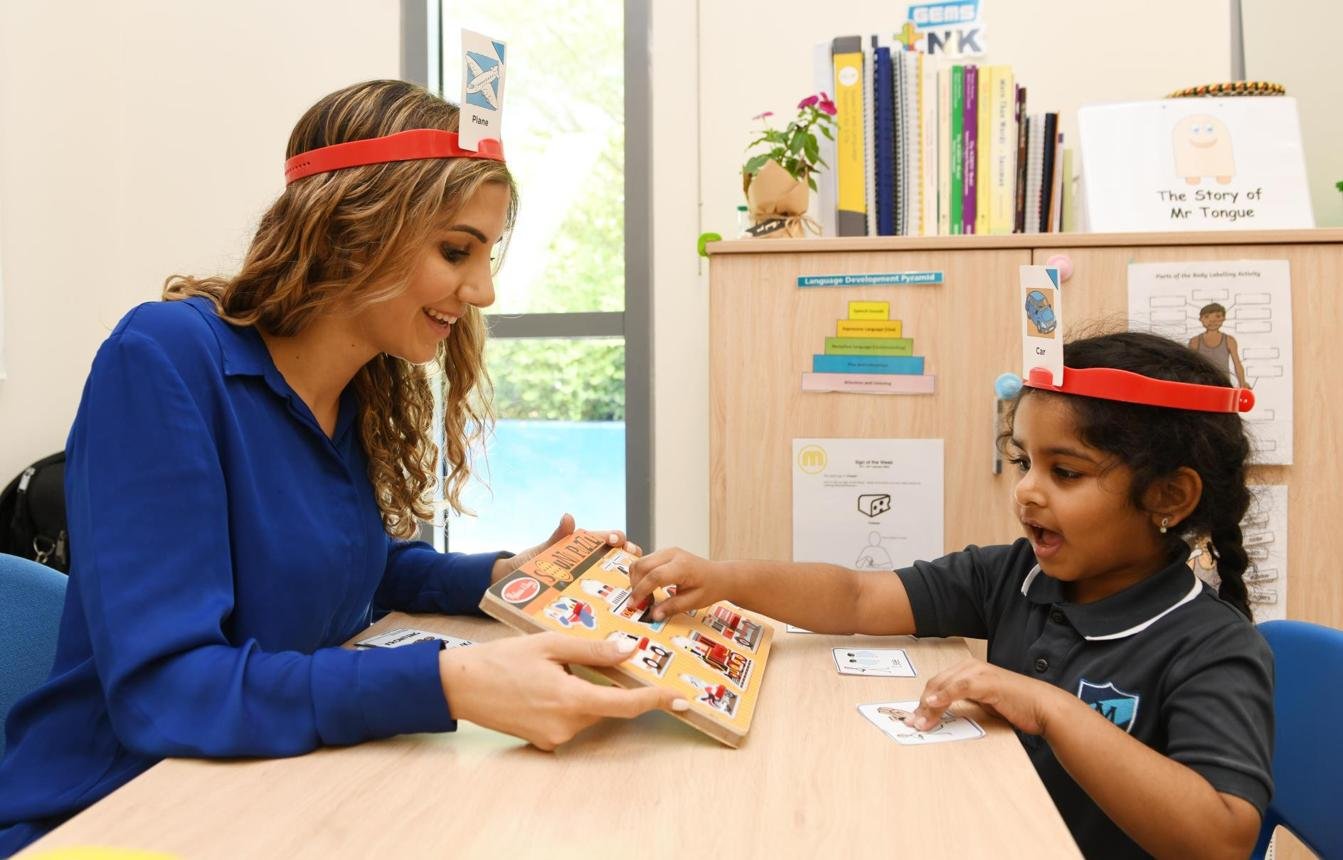
A Support Plan Built Around Your Child
We don't apply a standard program — we design an approach based on your child's personality, developmental stage, and the specific challenges they're facing. Younger children learn through play, older children through structured activities and conversation, and teenagers through a blend of skills coaching and exploratory talk. Parents are involved at every stage.
Get StartedHow We Help Children & Teenagers
Children aren't "small adults" — they process, communicate, and heal differently. Every method we use is specifically adapted or designed for young people.
Play Therapy
For children aged 5–10, play is their natural language. Through carefully selected toys, art materials, and guided activities, children express feelings they can't put into words. The therapist observes patterns, introduces coping strategies through the play narrative, and helps the child process difficult experiences in a way that feels safe and natural.
Ages 5–10 · Emotional Expression · TraumaParent-Child Interaction Therapy (PCIT)
A highly structured, evidence-based program for families struggling with defiance, aggression, or non-compliance. The therapist coaches the parent in real time (often through an earpiece from behind a one-way mirror) as they interact with their child. PCIT strengthens the parent-child bond while teaching the child to follow directions and manage frustration — often in 12–20 sessions.
Defiance · Aggression · Parent-Child BondCognitive Behavioral Therapy (Child-Adapted)
CBT adapted for children uses visual aids, worksheets, stories, and interactive exercises instead of abstract discussion. It helps children identify unhelpful thought patterns (like "Nobody likes me" or "I can't do anything right") and teaches them to test these thoughts and develop more balanced, realistic self-talk.
Anxiety · Low Self-Esteem · Negative ThinkingSocial Skills Training
Some children struggle not because of internal distress but because they haven't learned the social "rules" that come naturally to others — reading facial expressions, joining conversations, handling rejection, or managing conflict. Through role-play, modeling, and guided practice, children build the social toolkit they need to form and maintain friendships.
Friendship Difficulties · Social Anxiety · ASDFamily Systems Therapy
A child's behavior doesn't happen in a vacuum — it's shaped by family dynamics, communication patterns, and the emotional climate at home. Family therapy steps back from focusing solely on "the problem child" and looks at the whole system, helping parents and siblings interact in ways that support the child's growth while strengthening family relationships overall.
Family Conflict · Sibling Issues · Home DynamicsSchool Liaison & Academic Support
When challenges show up in the classroom, therapy alone isn't always enough. With your written consent, we communicate directly with teachers, school counselors, and learning support staff to ensure consistency. We help implement classroom strategies, support accommodations discussions, and address school refusal or academic underperformance linked to emotional factors.
School Refusal · Academic Struggles · BullyingConcerns That Bring Families Through Our Door
These are the real, everyday struggles parents describe. If one or more of these sounds familiar, you're not alone — and this is exactly what we help with.
A Place Where Your Child Feels Safe
Taking your child to a psychologist is a big decision. We make sure both you and your child feel comfortable, informed, and supported from the very first contact.
Specialists in Child Psychology
Child psychology requires different training and skills than adult therapy. Our psychologists have specific expertise in developmental psychology, play-based interventions, and family systems — not just general counseling applied to younger clients.
We Don't Blame Parents
Many parents arrive feeling judged — by schools, relatives, or themselves. Our space is completely free of blame. We see you as an essential partner in your child's progress, not the cause of their difficulties. The focus is always on moving forward together.
Children Actually Enjoy Coming
We've designed the experience to feel engaging, not clinical. Younger children look forward to play therapy sessions. Teenagers appreciate being treated with respect and having a space that's genuinely theirs. Resistance after the first session is extremely rare.
Parents Get Strategies, Not Just Updates
Every parent session includes practical guidance — specific phrases to use, routines to adjust, ways to respond to challenging moments. You won't just hear "your child is making progress"; you'll know exactly what to do differently at home to support that progress.
We Bridge Home and School
Consistency across environments is key for children. With your permission, we coordinate with your child's school to ensure teachers and counselors are aligned with the strategies being used in therapy — creating a unified support system around your child.
Clear Goals, Measurable Progress
At the start, we set specific, observable goals — not vague promises. "Reduce meltdowns from daily to once a week" or "Attend school independently within 6 weeks." We track progress against these goals so you always know where things stand.
Families Who Found Their Way Forward
These parents were exactly where you might be right now — worried, unsure, but willing to take that first step.
"My 6-year-old's tantrums were controlling our entire family life. PCIT at Mind Inside changed everything — not by 'fixing' my son, but by teaching me how to interact with him differently. Within weeks, the screaming matches stopped. I finally feel like a capable parent again."
"We tried three different therapists before finding Mind Inside. The difference was night and day. Our daughter actually looked forward to her sessions. The therapist communicated with her school, gave us weekly strategies, and after four months, our daughter went from refusing school to attending happily. We're so grateful."
"My teenager was shutting us out completely — no conversations, just door slams. The therapist here earned his trust in a way we couldn't. Slowly, he started opening up. The family sessions helped us understand what was really going on beneath the anger. Our relationship with our son has completely transformed."
Frequently Asked Questions
Honest, straightforward answers to the concerns parents raise most often when considering child psychology support.
Book an AssessmentA useful guide is whether the behavior is causing significant distress for your child, interfering with their daily functioning (school, friendships, family life), or persisting far beyond what's typical for their age. Occasional tantrums in a toddler are normal; daily meltdowns in a 9-year-old that affect the whole family likely warrant professional support. When in doubt, an initial assessment can give you clarity — there's no downside to checking.
We work with children from approximately 5 years of age through late adolescence (up to 17–18). For children under 5, we primarily work through parent-focused interventions such as PCIT, where the therapist coaches the parent directly. For older children and teenagers, we use a combination of age-appropriate individual therapy, family sessions, and skills training depending on the child's needs and developmental level.
Not necessarily. A diagnosis is only given when it's clinically justified and helpful for your child — for example, if it's needed for school accommodations or to guide treatment. Many children we see don't meet criteria for any disorder; they simply need support with specific challenges. We always discuss our clinical impressions openly with parents before any diagnostic label is applied, and we respect families' preferences.
It depends on the approach and your child's age. For younger children, parent involvement is central — you may be in the room or receiving coaching in real time (as in PCIT). For school-age children, we typically have a mix of child-only sessions and parent check-ins. For teenagers, we balance their need for privacy with keeping parents informed about progress and strategies. You will always be part of the process, never left in the dark.
Yes. We regularly work with school refusal, academic underperformance linked to emotional factors, bullying, peer conflict, and classroom behavior difficulties. With your consent, we can also liaise with your child's school — speaking with teachers, counselors, or learning support staff to ensure consistency between the therapy environment and the school environment. This integrated approach tends to produce the best outcomes.
The first session is primarily an information-gathering meeting, usually with the parent(s) present. We'll discuss your concerns in detail, your child's developmental history, family dynamics, and what you've already tried. For younger children, we may do a brief observation or informal interaction. After this session, we'll share our initial impressions and propose a tailored plan — so you leave with clarity on next steps, not more uncertainty.
